Summary
The big baddies inFinal Fantasyhave been known to lob planets, slice galaxies, and even give the fabric of reality itself a wedgie in their attempts to thwart the series' various heroes. Needless to say, these beings are throwing an immeasurable amount of power around. But put in an interdimensional ATB cage match, which entity from theFinal Fantasycannon would register as the most potent? Considering that the heroes are generally able to beat these villains in one-on-one combat, they might be considered the most powerful.
However, as these final confrontations are generally a three or four against one, these measurements of power would need to be split between each member of the party. Power isn’t always best measured by the ability to throw a punch or a meteor spell and can be expressed in more subtle ways, such as manipulating the laws of physics or acts of creation. As each game takes place in its own universe, it may be difficult to make direct comparisons, but with a little context and deductive reasoning, it’s possible to draw out a hierarchy of power. Massive, universe-splitting spoilers ahead!

Although Sin is defeated over and over again, Yu Yeven always manages to resurrect it using the final aeon of the summoner who manages to defeat it. With this, Sin and its parasitical summoner, Yu Yevon, managed to live on for hundreds of years, terrorizing the people of Spira. Although it does not have the power to destroy the world or reality, the people of Spiramay never be rid of Sin, and it remains an eternal source of despair.
Yevon, the religion formed around Sin’s arrival, falsely promises that if the people repent enough, Sin will finally disappear. However, from what is shown inFinal Fantasy 10, it seems that Yu Yevon’s sole purpose is to “mow the lawn” of civilization to ensure the sanctity of Dream Zanarkand, which it maintains out in the deep ocean, far from the real, ruined Zanarkand’s original location, which it did for over a thousand years.

This sorceress is able to reach through time and warp reality and does so in order to “kompress” time, making her one of the most powerful magic users in the series. According to one theory about Ultimicia’s backstory inFinal Fantasy 8, she isn’t just the most powerful sorceress; she also carries a part of a being known as “Great Hyne.” A myth in the modern world, Hyne was the cosmos' most powerful god and originally created humanity to do his bidding. After a long hibernation, he found humans had taken over the planet. Enraged, he set out to reduce their numbers.
After killing all of their children with a spell, the humans rebelled and were able to corner him, demanding his power in return for his life. To trick them, Hyne offered them his body but only gave them the inert part (in some interpretations, his skin). The rest of himself he hid in a line of women, blurring the line between the sorceresses and the god. Ultimicia’s plan could be understood as an attempt to undo the creation of humans, and hence, Hyne would have his godhood restored. This makes Ultimecia not onlyan incredibly powerful magic userbut also a hidden incarnation of the world’s creator deity.

Although Jenova’s impact on the world ofFinal Fantasy 7is only given in lore excerpts, her handiwork can be seen across the story. She is partially responsible for Sephiroth, as his cells are infused with hers. Sephiroth is powerful and willful in his own right, but his “mother” represents an unprecedented level of danger, not just to life but to the very planet she crosses, so much so that the planet made superweapons in order to combat her.
The Emerald, Ruby, Ultima, and Omega weapons were builtto prevent her total conquestas she all but wiped out the once-thriving ancients (the Cetra). Jenova has the ability to spread her genes like a plague, killing everything it comes in contact with, as well as shapeshifting to trick her prey. The last remnants finally managed to trap her in the crater she had created upon her arrival, after which she survived in stasis, waiting and biding her time, while Cetra’s cousins, the humans, then slowly began repopulating the planet.

Alexander, the holy-magic-wielding robot, has appeared in multiple games throughout the series, but the version seen inFinal Fantasy 14’s expansion, “Heavansword,” is undoubtedly an Alexander at its absolute peak, despite also being on the brink of shutdown. Although there are many beings of incredible power inFF14(the Hero of Light included), this Primal takes the spot for one reason: time travel.
As well as being monstrously huge, Alexander also has the power to alter the past, meaning that it could simply wipe out its enemy’s descendants, with the people of the present being none the wiser. It is down to sheer luck that Alexander appeared in Eorzea in its damaged state, caught in a time loop and looking to be put down by someone strong enough before its automated self-defense drive was able to involuntary drain the world’s aether dry.

The Creator would have been placed higher if it had not become insane over some assumed cataclysm that ended its people. Having lost its civilization and sense, the Creator goes on a cataclysmic rampage using all of the data collected from throughout all of the worlds using somefamiliar-looking crystals. Based on the knowledge it collected over eons, the Creator warps itself into a variety of monstrous forms before the party, each time losing more and more of its sentience and sanity.
It is only defeated by its own creations: the crystals from the Blue Planet (and the power of hope from the people who live there) and a spell cast by the last Maenad, one of the Creator’s servant beings. Its last words at the end ofFinal Fantasy 4: The After Yearsare “Thank you,” implying that it was searching for the release of death after so much suffering.

Kefka, the insane servant of the empire who betrayed his emperor, absorbed the magic of the Warring Triad, and became the god of magic, ends up with a high spot for one reason alone: he actually won in the end. While the party inFinal Fantasy 6does depose him from his heavenly throne, the chaotic evil jester succeeds in irrevocably tipping over the World of Balance.
The World of Ruin is a grim sphere on which the possibility of life flourishing is near zero, what with theseas of acid and earth of ash. Although Kefka met his end and the people of the planet began to rebuild, the final scenes of the game indicate that it would likely take generations, if ever, until nature could ever start to recover what had been lost.
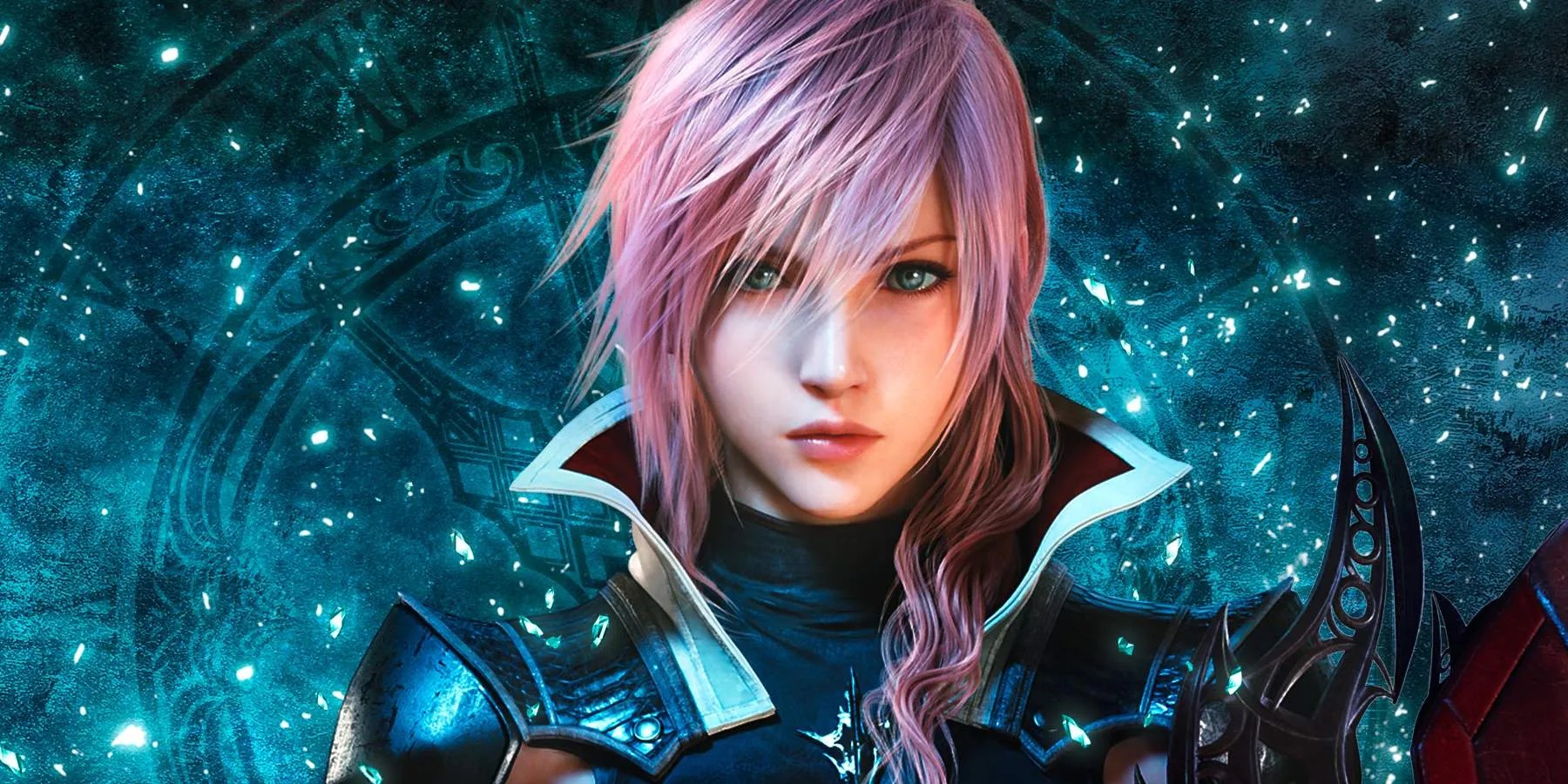
Most parties inFinal Fantasyare able to best the evil entity threatening the safety of the world itself by embracing the power of friendship, which means that after beating the last boss of the game, they’ll have a lot of experience points to share. However,Final Fantasy 13’s Lightning stands out as one of the few protagonists to stand against a big bad (the soul-hating god of the world, no less) and gomano-a-manowith them, that is, without help (although, yes, she was ultimately strengthened by her allies' bond of love).
Bhunivelze, the reality-warping, puppeteering creator god, would likely have taken a top spot on this list if not for the fact that he could not see that his own meddling would eventually make Lightning so strong,both physically and mentally, undoing his plans for a “perfect” world without human will. This, in the end, turned out to be a great weakness. Lightning, on the other hand, became so powerful after defeating him that she became a new goddess of death, and by ending Bhunivelze’s reign, helped to usher in a new universe.
